Judging a repaired surface
Why a repair patch changes as it dries
A new render patch can look darker, lighter or more conspicuous than expected while the work is still in progress. That does not automatically establish a defect, but neither should every concern be dismissed with a vague instruction to wait. A fair review needs the actual material, the stage it has reached and the finished appearance that was agreed. This guide explains how to keep those questions separate when assessing a repair.

On this page
Know what was included in the repair
On a Wilmslow house exterior, a local patch might be the final finish or one stage before a broader coating. Those are different completion points. The quotation should identify the repair material and whether further decoration remains. If the scope is unclear, the owner may judge an unfinished patch as the final result while the contractor assumes everyone knows another operation is still planned.
The technical purpose also matters. A repair intended to restore a defective area can be successful without becoming invisible. If the owner wanted a uniform whole elevation, that finishing objective should have been discussed before commissioning the patch. It may require an appropriate wider treatment, but the need for that treatment should not be confused with the extent of material that genuinely needed repair.
Let the product specification define the stages
Fresh render changes condition after application, and the relevant timing depends on the material and circumstances. Curing, drying and readiness for a subsequent coat are not interchangeable casual descriptions. The actual product or material specification should guide the sequence. A universal number of days copied from another job is not a reliable instruction for every repair.
Ask for the relevant stage to be explained in plain terms: what has been completed, what is still required and when the next operation or review is appropriate. This is a focused technical clarification, not a reason to leave the project open indefinitely. The programme should identify a sensible inspection point while recognising the conditions required by the chosen material.
For lime repairs, compatible materials and protection need particular consideration. A schedule appropriate to one modern product may not suit the specified lime work. The final coating, if any, should also be appropriate to the wall. The timing should follow that complete specification rather than a decorative deadline imposed without reference to the material.
Compare the texture as well as the tone
A repair can be close in colour and still stand out because its grain or plane differs. Conversely, a fresh tonal difference may become less pronounced while the surface texture remains appropriate. These observations deserve separate attention. Photograph the repair from an ordinary viewing position and in a closer view, retaining enough context to identify its location on the elevation.
When comparing photographs taken on different days, note whether the wall was wet, shaded or in direct sunlight. Those conditions can explain part of the apparent change without answering the separate question of whether the repair meets its specification.
Silicone finishes and monocouche render have different visual characteristics, and repairs need to be considered within the installed system. An old wall can also have weathered or been coated since its original application. The original product reference is useful information, but it does not guarantee that a fresh patch will replicate the aged surrounding surface exactly.
Use the agreed sample and boundary
If a sample or trial repair was accepted, keep it available as a reference. It should be clear what it demonstrated: material suitability, texture, colour or some combination. A small trial may not represent the plane of a larger repaired area, so avoid treating it as evidence for matters it never showed. The contract and specification should explain the intended finish at the relevant scale.
The boundary is equally important. A local patch within an uninterrupted elevation can remain more noticeable than work finished to a corner or recess. That does not mean every small repair should be enlarged. It means the visual expectation should be agreed with the technical scope. The render repair guide explains why the necessary repair extent and the desired decorative extent are separate decisions.
| Observation | What to clarify |
|---|---|
| Fresh patch differs in colour | Its stage and the specified review point |
| Texture remains visibly different | The approved finish and expected repair boundary |
| Crack or detachment is present | Whether further technical assessment is needed |
| Coating is still outstanding | The complete scope and intended final appearance |
Distinguish appearance from physical concerns
A colour difference should not distract from a crack, detachment or another physical symptom that may need assessment. Equally, a patch should not be declared technically failed solely because it is visible. Describe the observation accurately and refer it to the relevant person with the product and scope information. This gives the review a clear subject rather than a general dispute about whether the wall looks new.
Where the same area failed previously, retain the history. The repair method should have addressed the relevant cause, not just the visible outline. If the symptom returns, that record helps direct further investigation. A fresh coating should not be offered as a substitute for resolving an ongoing defect merely because it could reduce the immediate visual contrast.
Review any proposed decorative remedy separately
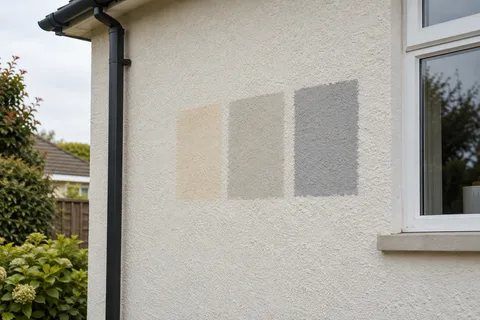
A compatible colour-change coating may bring a repaired elevation into a more consistent tonal relationship. It will not necessarily remove differences in grain or plane, and it requires a suitable prepared background. The proposal should state what improvement is expected and what may remain visible. It should not promise that decoration can make every patch disappear regardless of its construction.
If a trial finish is sensible, agree its location and review stage before extending it. Keep the actual product and method identifiable. An acceptable result on one patch may not prove that another area with different existing layers will behave identically. The scope should follow the assessed wall rather than a single successful sample being treated as permission to coat every surface on the property.


Make the review practical and documented
Arrange the relevant review while the project information and appropriate access remain available. Bring the agreed specification, sample reference and photographs together. Identify any outstanding work and the person responsible for it. A concise written outcome is more useful than repeated informal conversations in which the expected result changes slightly each time.
If the review requires further technical advice, make the unresolved question specific. It might concern compatibility, recurring cracking or the achieved finish against the specification. The appropriate reviewer can then assess that matter rather than receive a broad instruction to decide whether the entire façade is acceptable from one photograph.
Keep the repair record after the colour settles
Retain the location, material, date and final coating information with the building records. For whole-house work, a marked elevation can identify several repairs beneath a uniform finished colour. This is useful when an extension is planned, a fitting moves or another patch needs attention. It prevents the next contractor relying entirely on the visible surface to guess what was previously done.
The fair approach is neither immediate rejection of every fresh colour difference nor indefinite reassurance that all patches will vanish. Use the specified stages, assess physical condition and compare the appearance that was actually agreed. A clear review can then lead to completion, a defined finishing step or a specific further investigation, with each decision tied to the work on the wall.
Common questions
How many days should I wait before judging a patch?
There is no universal number for every render and condition. The material specification, weather and any subsequent coating determine the relevant stages. Agree the review point with reference to the actual product and work, rather than applying a generic waiting period to an unknown repair.
Does a visible patch mean the repair has failed?
Not necessarily. A sound compatible repair can remain distinguishable because the surrounding wall is aged or differently textured. Physical defects and appearance should both be reviewed, but they are not the same question. Refer to the agreed technical scope and finishing expectation.
See housing and planning information for Wilmslow and nearby places, including the source and geography behind each figure.