Colour without an unclear repair promise
Render respraying in Wilmslow | Exterior colour choices
Changing the render colour can alter how windows, brickwork and roof lines read together. It can also reveal how much the existing texture contributes to the appearance. For a Wilmslow colour-change project, the finish should be chosen on a suitable wall and reviewed beside the materials that will remain. The coating contract needs to say what is being repaired, what is being prepared and what is simply being decorated, so a new colour does not conceal an unfinished repair brief.

On this page
Confirm that the existing surface can be coated
The wall may look broadly sound while containing weak paint, detached render or patches from earlier work. Those conditions need assessment before the coating is selected. Identify the existing layers where possible and use technical guidance relevant to the proposed product. A claim that an exterior coating works on everything is not a substitute for compatibility and adhesion considerations.
If the main issue is a local defect, render repairs may need to precede the decorative work. If failure is extensive, replacement could be a more appropriate scope. The quotation should distinguish these possibilities from a simple colour change. A coating should not be presented as a way to resolve every crack or make an unsound surface serviceable.
- Clean Washed down, with algae and mould treated and left to work.
- Repair first Cracks and hollow patches are repaired before any coating.
- Prime or stabilise Where the coating maker requires it on that surface.
- Coating Usually two coats of a breathable masonry or silicone coating.
The usual order of work. The survey and the chosen products decide the actual steps.
Build a small, useful colour comparison
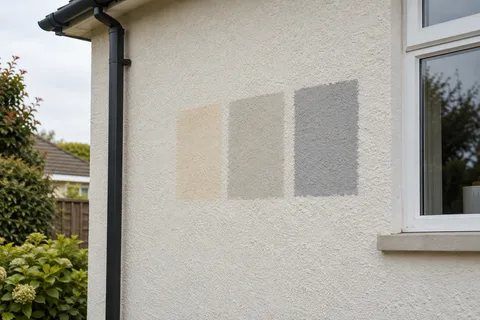
Choose a limited set of samples and view them beside fixed elements such as frames, doors and brickwork. Too many tiny swatches can make the decision harder without showing how any colour will work at elevation scale. A representative sample should be large enough to reveal the texture and should be reviewed after reaching the condition appropriate to the product.
Include more than one orientation where the building's lighting differs substantially. A colour that looks quiet in shade may appear much brighter in direct light. That is not necessarily a problem, but it should be part of the choice. Where the exterior contains different textures, test the intended colour on each relevant surface instead of assuming the same reference guarantees the same perceived result.
The sample decision should identify the product as well as the shade. Two products described by a similar colour name may have different finishes and technical properties. Keep the approval with the scope, particularly where several owners or other decision-makers are involved. This avoids a later conversation in which one person approved a screen image while another expected the physical sample.
| Neighbouring material | Sample consideration |
|---|---|
| Dark window frames | Contrast and the perceived brightness of a pale finish |
| Existing brickwork | Warm or cool undertones beside the coating |
| Different render textures | How grain and shadows change the same colour |
| Stone or roof coverings | Whether cleaning or other planned work changes their tone |
Address marks before covering them
Stains beside a driveway, beneath a sill or around a downpipe can have different causes. Establish the relevant source and the condition of the finish before choosing a cleaning or coating method. A persistent leak should be resolved within the wider project. A new colour may temporarily hide its effects without stopping the wetting that created them.
Cleaning needs to suit the surface and the intended coating. Aggressive pressure or an unsuitable treatment can damage texture and complicate the work. The contractor should select an appropriate method, with a trial where useful. This is particularly relevant when the underlying system is uncertain or when the façade includes adjoining materials that respond differently to the same cleaning process.
Specify preparation and protection in ordinary language
The quotation should describe how weak material, contamination and repairs are treated, then identify the primer or coating system proposed. Avoid a preparation allowance so broad that it could mean either a light wash or extensive removal. Where the existing finish is a silicone system, use compatible maintenance guidance. For lime-rendered masonry, the complete wall and retained coatings need appropriate specialist consideration.
Protect the materials that are staying uncoated. Windows, stone, vents, paving and neighbouring surfaces need a method suited to the application. If spraying is proposed, the plan should account for containment and conditions as well as access. A busy drive or a narrow boundary setting can influence the method. No finish should be applied on the assumption that overspray can simply be cleaned from every adjoining material afterwards.
Define the edges of the colour change. Returns, plinths, reveals and recessed areas may be easy to omit from a broad description of the exterior. Decide whether pipes and other fittings are excluded or treated through a separate appropriate specification. A marked photograph can make those boundaries clear and gives the completion inspection a practical reference.
Use the same boundary drawing when requesting each quotation, so differences in price are not simply differences in the surfaces included.


Keep the work consistent across phases
If a whole-house refurbishment is being completed in stages, agree natural boundaries and material arrangements. Later work can differ because of weathering and other factors even when the original colour reference is retained. Discuss that before separating a visually continuous face into different contracts. Where a phase must stop, its edge should be deliberate and suitable for the work.
At handover, retain the coating details, preparation record and repaired-area information. Future cleaning or another colour change can then be assessed against known layers. On commercial premises, pass this information to the person responsible for building maintenance, not only the person who approved the colour. A well-specified coating project should leave a clear material record beneath its new appearance.
Common questions
Can the front and rear use the same colour but look different?
Yes. Light, shade, texture and the materials around each elevation influence appearance. Review samples in representative positions and identify the actual approved product and colour. A consistent specification does not make different orientations look identical throughout the day.
Does respraying always mean a spray application?
No. The appropriate method follows the product and setting. A quotation should explain whether spraying, rolling or brushing is proposed, together with the protection and preparation involved. The service name should not dictate a method that is unsuitable for the surface or surrounding property.
See housing and planning information for Wilmslow and nearby places, including the source and geography behind each figure.